Paleolithic Period
Introduction
The Paleolithic Period, also known as the Old Stone Age, is the earliest era of human history, characterized by the use of stone tools and the emergence of early hominins. This period spans from around 2.6 million years ago to approximately 10,000 years ago, marking a significant portion of prehistoric human development.
Archaeological Discoveries in China
Fujian's Wanshouyan Hills
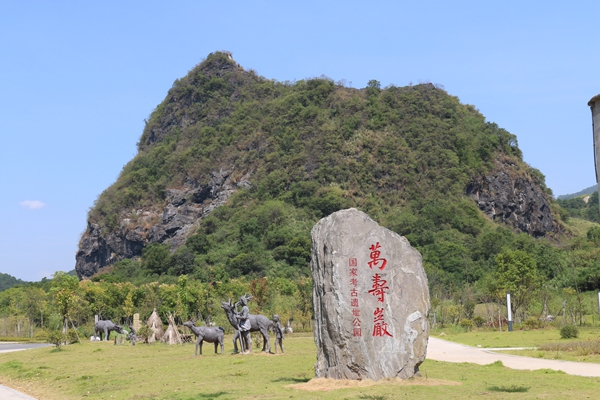
The Wanshouyan Hills in Sanming, Fujian province, China, provide pivotal insights into the Paleolithic Period. This archaeological site revealed evidence of human activity dating back roughly 185,000 years, making it the oldest known site of human habitation in coastal China. The discovery of stone tools and animal bones in the caves of Wanshouyan suggests significant human presence and activity.
This site almost faced destruction over two decades ago due to industrial expansion. However, preservation efforts by the Sanming Conservation Center for Cultural Heritage saved it. Remarkably, this site has filled a critical gap in the archaeological timeline of Fujian, a region previously devoid of Paleolithic findings until the 1980s.
Key Discoveries and Research Initiatives
In 1999, lithic artifacts were unearthed in Lingfeng Cave within the Wanshouyan site, including retouched tools such as scrapers and chopping implements. These findings were crucial in establishing the site's significance and prompted further archaeological investigations. The artifacts share similarities with stone-tool traditions found in southern China but also exhibit unique characteristics due to the high proportion of flake tools and scrapers.
Wanshouyan was listed as one of China's top 10 archaeological discoveries in 2000.
Broader Archaeological Context in China
Zhoukoudian and Peking Man
The Zhoukoudian Site, located near Beijing, is another critical archaeological site from the Paleolithic Period. It is renowned for the discovery of the fossils of Peking Man (Homo erectus pekinensis), which date to the Middle Pleistocene. This site provided substantial evidence of early hominin life in East Asia, including the use of fire and tool-making.
Other Significant Sites
Other important Paleolithic sites in China include those in the Nihewan Basin and Lingwu's Shuidonggou. These sites have yielded significant artifacts and fossils that contribute to our understanding of early human settlement and behavior in the region.
Importance of Archaeological Preservation
The preservation of sites like Wanshouyan and Zhoukoudian underscores the importance of protecting cultural heritage against modern industrial encroachments. These efforts ensure that valuable historical and prehistorical insights remain available for future generations, allowing us to trace the evolution of early human societies and their adaptation to diverse environments.








